San Diego coastal treasures and El Niño
Cliff collapse and erosion aren’t the only dangers posed by heavy rainfall and rising sea levels. Times of San Diego takes a look at what the experts are saying about El Niño's possible impact on coastal icons from San Onofre to the border.
Intro | North County | La Jolla | City beaches | Bayfront and South Bay
Pacific Beach
Tourmaline Surf Park is especially vulnerable to erosion, and the reason is rooted in its geology.
The coastal bluffs at Tourmaline are composed of four different types of rock and sediment that are weakly packed together, making the cliffs more susceptible to erosion from heavy rainfall and stormwater runoff.
As a prioritized coastal resilience site, the city is working to shore up Tourmaline before major storms make landfall. Crews will use cobblestone and sand to bury a layer of large rocks, forming a solid base. Then, native plants will cover the artificial sand dune, which will help support local wildlife.
The 175-foot-long and 50-feet wide natural barrier will protect the nearby parking lot, access ramp, and bathroom from coastal flooding. This project is 15% complete as of September, according to city spokesman Peter Kelly.
Further south, Crystal Pier offers a more visible example of what El Niño can do.
Winter waves have hammered the pier since 1927. During the 1982-1983 El Niño, 15-foot waves destroyed roughly 150 feet of decking when four storms struck in just one week, according to an archival report from January 27, 1983.
The city spent $2.06 million on emergency repairs after Crystal Pier suffered more storm damage in 2023. The project closed the popular attraction for 18 months.
“While the pier is open and structurally sound, work will continue to strengthen its resilience against rising tides and increasingly intense storms,” City Council President Joe LaCava wrote in a press release on July 3, 2023.
Mission Beach
Mission Beach is one of San Diego’s most developed stretches of coastline, with homes, businesses and Belmont Park packed against the oceanfront boardwalk. With little room left between.
An aging seawall lines the walkway and offers some protection from coastal erosion and flooding, but it may be overpowered by surging tides this winter. The concrete wall guarding the boardwalk seems short, but is buried 20 feet into the sand, according to a 2021 California Coastal Commission report.
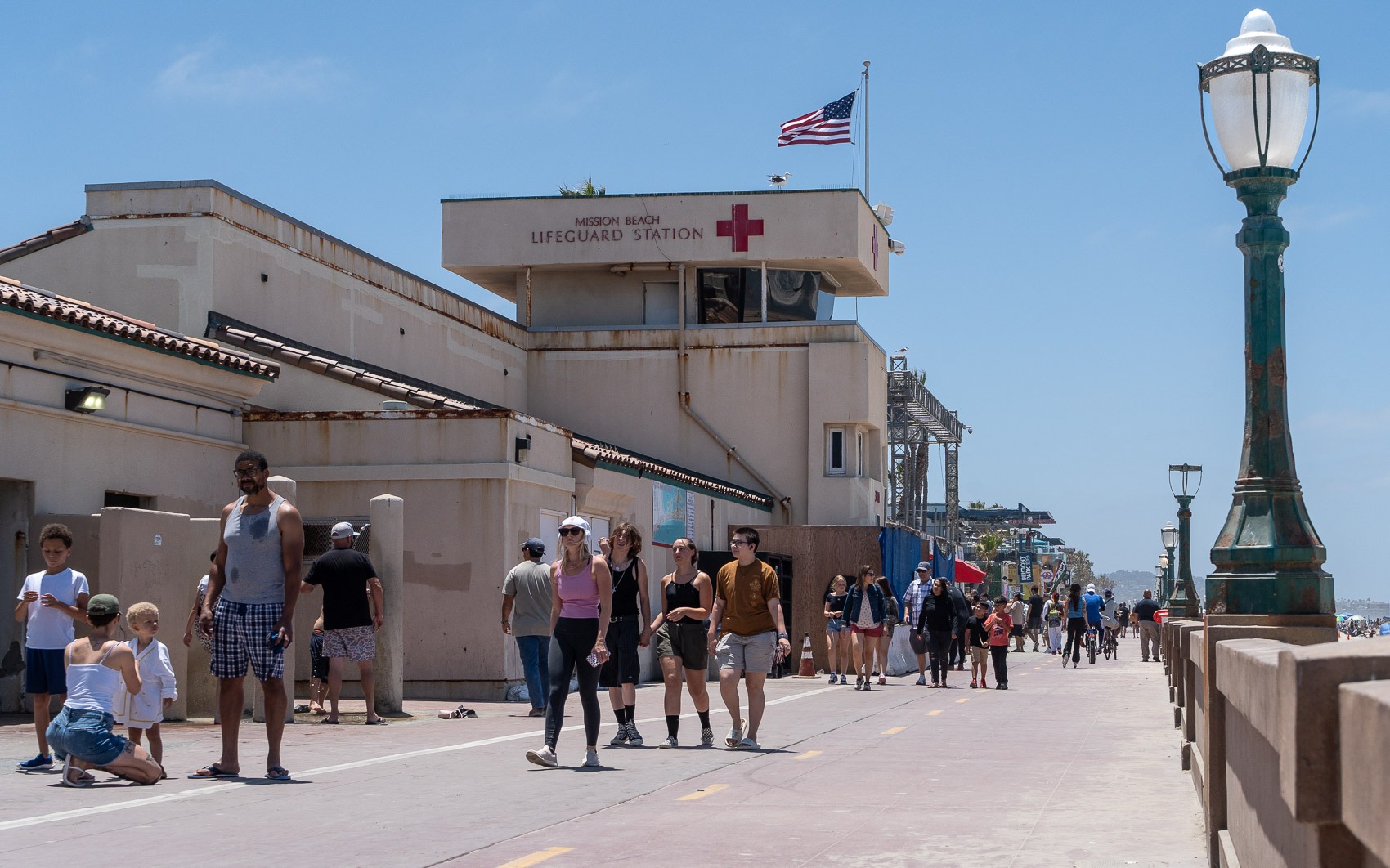
The city is considering a plan to restore the seawall, potentially raising the wall by up to 12 inches to protect from rising sea levels. A new 375-foot seawall would be constructed on the northern end of the current wall, from Thomas Avenue to Grand Avenue.
Mission Beach is among the sites included in the city’s Coastal Resilience Master Plan, but the proposed project – a five-foot-tall artificial sand dune along the seawall’s west side – has not broken ground due to funding constraints, according to city spokesman Peter Kelly.
Ocean Beach

Dog Beach, the first of its kind in the United States, lost 360 feet during the 2015-2016 El Niño, as reported by Young’s research team. This was the greatest land change they measured in all of Southern California. Erosion on San Diego beaches ranged from 6.5 feet to 10 feet that winter, compared to less than six feet in a typical season, as reported by Times of San Diego.
With sea levels rising 11 inches above predicted heights, surging waves stripped away sand from the popular pet beach at the San Diego River outlet. This significantly shrank the buffer between the beachfront and raging sea, leading to major coastal flooding in January 2016.
South along the boardwalk lies the Ocean Beach Pier, a 60-year-old structure that has been repeatedly damaged by powerful waves. This degraded the structure over time; the final nail in the coffin came in December 2023.
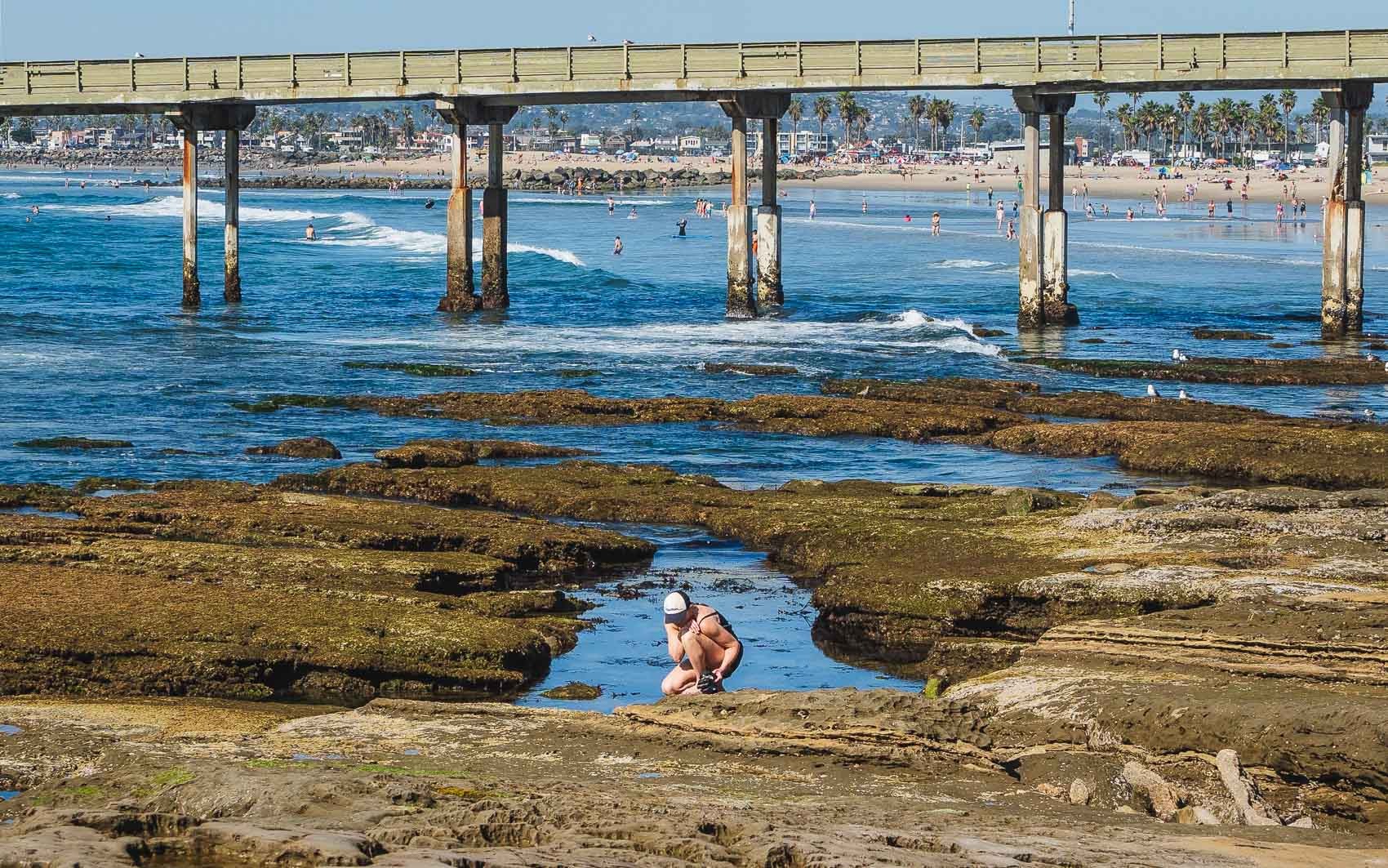
The pier was initially closed in October, but strong waves caused significant damage later that winter. Instead of responding once again with costly repairs, the city decided it would be better to replace the pier entirely.
Both iconic areas have been identified in the Coastal Resilience Master Plan, which will raise artificial dunes along Ocean Beach’s entire beachfront. The City Council prioritized the neighboring construction projects to restore the sand buffer before winter storms strike — they are currently 15% complete, according to city spokesman Peter Kelly.
Point Loma
Point Loma’s Sunset Cliffs may look significantly different after the ‘Super’ El Niño strikes, with San Diego’s newest social media attraction at risk to erosion, according to physical science Professor Lisa Chaddock.
The Arch recently received national attention after videos of dangerous cliff diving stunts gone wrong went viral. This social media-fueled frenzy led many to assume that the city would close off the public from the iconic sandstone arch, but others suggested coastal erosion might claim it first.

Professor Chaddock recently warned Times of San Diego readers that now is not a good time to practice cliff jumping at The Arch — and not just to avoid the minimum $100 fines. She pointed to a large section that broke free in mid-April, explaining the area surrounding The Arch is already eroding.
“Sandstone in San Diego wears away quickly,” Chaddock wrote in late July. “It’s expected for it to lose more surface during periods of high waves and storms because of the physical stress on the rocks.”
Chaddock’s concerns are supported by Young’s research, which documented a sea arch failure at Sunset Cliffs and up to 32 feet of cliff retreat during the 2015-2016 El Niño. The failure was one of only two locations in Southern California where researchers detected significant cliff-top retreat during the winter.
Sunset Cliffs is slated for changes under the city’s resilience project, which would move infrastructure away from the eroding bluff edge. Paved parking lots along the northern section would be replaced with pull-in spaces, trail improvements, native vegetation and drainage upgrades, while the southern section would convert Sunset Cliffs Boulevard into a multi-use path and southbound one-way road.