


Part two of a three-part series exploring San Diego’s long-forgotten motor lodges and the roadside culture that grew around them.
The postwar years changed the way San Diego welcomed travelers.
As more Americans owned cars, a hotel room in the center of town was no longer the only way to spend a night in the city. Travelers wanted something different: a place they could reach by automobile, park outside their room and, increasingly, enjoy as part of the vacation itself.

San Diego was ideally positioned for the motel boom.
The city’s highways carried travelers toward the beaches, downtown, Mexico, and the desert, while Mission Valley was being transformed into a major commercial and tourist destination.
Along El Cajon Boulevard, the change was especially dramatic. By 1950, 48 motels had been constructed along the boulevard, according to a San Diego History Center study of the city’s commercial strips.
The boulevard had already developed as an automobile-oriented route. During the 1920s and 1930s, it was lined with gas stations, restaurants, and tourist camps catering to people traveling by car. Those earlier tourist camps gradually evolved into the more modern motels of the postwar era.
The new motels were generally one or two stories, with rooms arranged around parking areas so guests could pull up close to their accommodations. They were less formal than downtown hotels and designed around the automobile.

And they looked different, too.
The plain roadside lodging of an earlier generation gave way to a distinctly American form of architecture. Motels adopted bright signs, unusual rooflines, decorative themes, and increasingly elaborate swimming pools.
The goal was simple: get the motorist’s attention.
San Diego’s commercial strips became a showcase for what the San Diego History Center has described as “Exaggerated Modern” architecture. Slanted rooflines, boomerang-shaped signs, trapezoidal forms, and giant arrows were designed to be seen from a moving automobile.
Neon was part of the attraction.
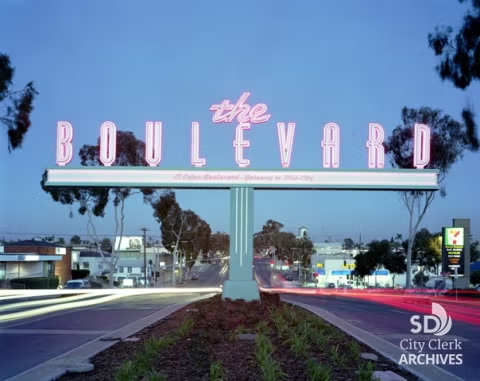
A motel sign was not merely a name. It was advertising, architecture, and landmark rolled into one.
Some motels went even further, using swimming pools and landscaped grounds to sell the idea of a California vacation. The motel was no longer simply a cheap place to sleep. It could promise sunshine, recreation, and a little bit of glamour.
Mission Valley became one of the most important places for this new kind of lodging.
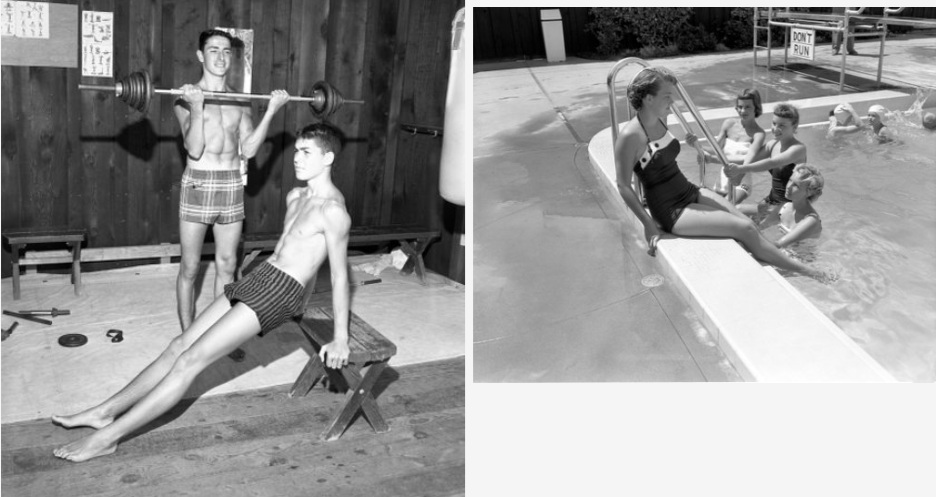
The valley was still changing rapidly in the 1950s when developer Charles H. Brown began promoting hotels and motels there. The city of San Diego’s Mission Valley Historic Context Statement identifies the development of Hotel Circle as a major part of that transformation.
The Town and Country was among the earliest. It began in 1953 as a 46-room motor inn.
Other properties followed, creating the concentration of hotels and motels that eventually became known as Hotel Circle. The Stardust Hotel, Kings Inn, Vagabond Inn, Mission Valley Inn, and Del Webb’s Highway House were among the properties documented in a circa-1960 photograph of the area.

These were not simply roadside boxes.
Many of the Mission Valley properties were designed as garden-style resorts, with one- and two-story buildings arranged in L- or U-shaped configurations around landscaped areas and swimming pools. Parking was incorporated into the design so guests could easily reach their rooms from their cars.

That combination — automobile access, landscaping, swimming pools and modern architecture — became a defining feature of San Diego’s postwar motel culture.
The boom was part of a much larger transformation of the city.
Mission Valley was becoming a destination in its own right, helped by new highways, shopping centers, restaurants and attractions. SeaWorld opened in 1964, adding another major tourist draw to the region.
Meanwhile, El Cajon Boulevard remained a classic example of the roadside commercial strip. Its motels competed with restaurants, gas stations, and other businesses for the attention of passing motorists.
Some of those properties adopted names and designs intended to make them memorable. The Imperial “400” Motel, for example, was part of a national chain whose Southern California prototype was designed by architects Palmer & Krisel. Its butterfly-roof design was intended to give the chain a recognizable look.
The motel boom also changed the physical landscape.
The old tourist camps had occupied relatively large pieces of inexpensive land. The new motels were more substantial businesses, often with landscaped grounds, pools, restaurants, and prominent signs.
For travelers arriving in San Diego by automobile, the experience was increasingly part of the destination itself.
A glowing sign promised a room.
A swimming pool promised vacation.
And a distinctive building promised that the traveler had arrived somewhere different.
San Diego’s motel boom captured the optimism of the postwar automobile age. Cars provided freedom, highways opened up new routes, and motels turned the roadside into part of the vacation.
For a while, San Diego seemed to have room for all of them.
But the same highways that helped create the motel boom would eventually help destroy much of it.
Sources:
Read more history stories here. Do you have a story to tell? Send an email to DebbieSklar@cox.net.
- San Diego History Center, “Mercantile to MacDonald’s.”
- City of San Diego, Mission Valley Historic Context Statement.
- City of San Diego, College Area Historic Context Statement.


