The continental shelf off of America’s coasts represents a vast area for future development of energy resources, from oil and gas to renewable wind and wave energy, a federal official said Tuesday.
William Y. Brown, chief environmental officer for the Bureau of Ocean Energy Management, outlined a series of projects for researches and students at Scripps Institution of Oceanography.
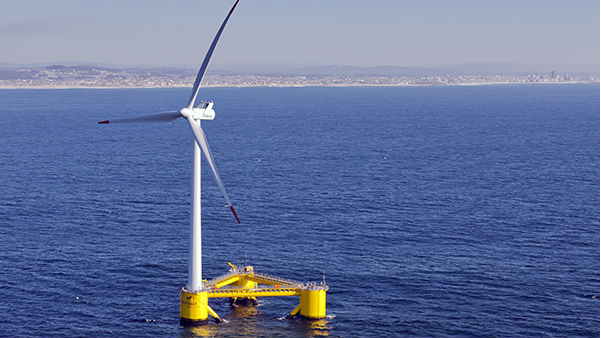
He said he is particularly excited about the WindFloat Pacific Project, which would put five floating wind turbines some 16 nautical miles off Coos Bay, Oregon, by 2017.
California can play a “quite significant role” in offshore renewable energy, Brown said. “There’s a lot of wind. The wind increases as you go north. There’s a lot of wave energy,” he said.
At the same time, he warned there can be public opposition, citing protests over a wind farm planned for Nantucket Sound on the East Coast.
“I’ve been surprised by the degree of public controversy that erupts around renewables,” he said.
He said a major part his agency’s work is finding ways to avoid harm to marine life as energy is exploited, and urged the Scripps researches to ask innovative questions. “Think about the potential impacts of energy development on the outher continental shelf,” he said.
The bureau’s area of focus stretches for 200 nautical miles off of America’s coastlines, a total area of some 1.7 million square miles.