

With less than a week until Election Day, the two candidates seeking to become National City’s next mayor shared a stage to debate one of the region’s most pressing challenges: homelessness and whether local governments are doing enough to respond to a crisis that shows little sign of easing.
The forum was hosted by San Diego Rescue Mission, a nonprofit that provides shelter, addiction recovery services and transitional housing. Since opening its National City campus, the organization has become a key part of the South Bay safety net for residents struggling with homelessness, mental illness and substance abuse.
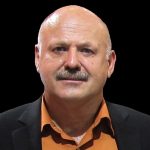
Before an audience of donors, volunteers and community members, Councilmembers Marcus Bush and José Rodríguez agreed on the broad outlines of many of the city’s challenges, but offered different approaches to addressing them, highlighting contrasting leadership styles as they compete to succeed outgoing Mayor Ron Morrison.
The discussion opened with a simple question: Why do you want to be mayor?
Bush rooted his answer in his personal connection to the city. A Sweetwater High School graduate who grew up in the area, he said his experiences have given him firsthand insight into the struggles facing many National City families. He described homelessness as a crisis closely linked to mental health, praised the city’s homeless outreach efforts and argued that National City must strengthen its finances before it can expand social programs.
“I don’t see people experiencing homelessness as any different from us,” Bush said, recalling his support for bringing the rescue mission to National City. “These are people who are trying to get their lives back on track.”
Rodríguez focused on what he called the everyday concerns of residents.
For years, he said, he has spent time knocking on doors throughout the city and hearing about issues ranging from cracked sidewalks and poor street lighting to deteriorating roads and rising housing costs.
“We need to be a proactive government, not one that waits for residents to call before we address a problem,” Rodríguez said.
When the discussion turned to poverty and homelessness, both candidates argued that the issue is more nuanced than it often appears.
Rodríguez drew a distinction between people living in cars and RVs because they can no longer afford rent and those struggling with severe mental illness or addiction.
He pointed to working families who have been priced out of housing despite holding steady jobs, and he recalled conversations with seniors whose rents increased dramatically in a short period of time. Preserving affordable housing, he said, is just as important as building new units.
“There are people working every day who simply can’t afford a place to live anymore,” Rodríguez said.
Bush acknowledged that homelessness has multiple causes but said addiction and mental health challenges deserve greater attention from policymakers.
He argued that current laws often make it difficult to intervene when people pose a danger to themselves or others and called for expanded detoxification and treatment options. At the same time, he said residents have legitimate concerns when they encounter people experiencing severe behavioral health crises in public spaces.
One of the more substantive exchanges centered on policing and public safety.
Rodríguez defended National City’s police department and emphasized the importance of maintaining rapid emergency response times.
“When it comes to life-threatening emergencies, minutes matter,” he said, arguing that adequately funding police and fire services remains essential.
Bush agreed on the importance of maintaining a local police force, but said officers should not be expected to serve as the city’s primary response to homelessness.
Police can address immediate public safety concerns, he said, but long-term solutions require social workers, treatment providers and housing resources.
“They’re not social workers,” Bush said, referring to law enforcement officers. “We need to give them the tools and partners they need.”

The candidates were also asked about California’s spending on homelessness programs after the moderator cited figures showing the state spent approximately $2.4 billion on homelessness-related services in 2024.
Bush said additional funding alone will not solve the problem without stronger accountability measures.
“There probably isn’t enough money,” he said, “but if we’re not spending what we already have effectively, we can’t just keep asking for more.”
He praised San Diego Rescue Mission’s model as an example of an organization producing measurable results while warning that government agencies must do a better job tracking how tax dollars are spent.
Rodríguez took a different approach, saying he could not determine whether the amount was sufficient without understanding exactly how the money was allocated. However, he argued that local governments have increasingly been left to handle responsibilities once supported by greater federal investment in housing and mental health services.
Perhaps the most sensitive issue of the afternoon was National City’s camping ban, adopted in 2024 after a U.S. Supreme Court ruling gave local governments broader authority to enforce anti-camping ordinances.
Rodríguez offered a measured response, saying he understands the concerns of residents who feel unsafe when encampments develop near their homes while also recognizing the need to treat unhoused individuals with dignity and compassion.
“There’s no simple answer,” he said.
Bush was more direct.
He said he continues to support the ordinance, despite initially having reservations. In his view, the policy has worked because it was paired with homeless outreach and support services rather than relying exclusively on enforcement.
The sharpest moment of the forum came near the end when the discussion shifted beyond National City and toward the broader regional response to homelessness.
Rodríguez expressed frustration with wealthier North County communities, arguing that many have not done enough to build housing or shoulder their share of the responsibility.
Bush agreed that homelessness is a regional issue, but used the opportunity to contrast his style of leadership with his opponent’s.
Without directly criticizing Rodríguez, Bush suggested that publicly challenging other cities can sometimes create unnecessary friction and make regional partnerships more difficult.
“I want to draw a distinction between our leadership styles,” Bush said. “Sometimes it’s better to go directly to the source and have those difficult conversations than to create a public controversy.”
Rodríguez pushed back, defending decisions he has made in office and arguing that leadership often requires taking politically uncomfortable positions.
He cited the arrival of San Diego Rescue Mission in National City as an example. The project drew significant opposition from some neighbors when it was first proposed, but Rodríguez said it was the right decision for the city.
“It takes political courage to do what’s right,” he said.
For a few minutes, the discussion became less about homelessness policy and more about two competing visions of leadership: one centered on consensus-building and behind-the-scenes negotiation, the other on public advocacy and a willingness to challenge the status quo.
Despite the exchange, both candidates ended the forum on a conciliatory note.
Bush urged voters to support a leadership style rooted in collaboration, civility and coalition-building. Rodríguez called for a more proactive city government focused on addressing residents’ concerns before they become larger problems.
The debate was unlikely to dramatically reshape the race. But it underscored a reality neither candidate disputed: whoever wins next week will inherit a city where homelessness, affordable housing, mental health and public safety will remain among the defining challenges facing local government long after the campaign ends.


