
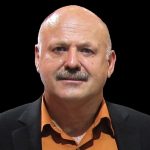

There is one question that seems to follow Xavier Becerra everywhere he campaigns, whether he is in the Central Valley, Los Angeles or along the San Diego-Tijuana border.
Voters rarely begin by asking about ideology or the political battles dominating the national conversation. Instead, they want to know something far more immediate: How is a working family supposed to keep up with the cost of living in California?
The concern is hardly surprising. In community after community, residents raise the same issues: rising rents, expensive gasoline, higher grocery bills, and healthcare costs that continue to take a bigger bite out of household budgets.
That reality has become the centerpiece of the former U.S. Health and Human Services secretary’s campaign for governor. His message is straightforward: California needs to focus again on the people who keep its economy running.
The son of Mexican immigrants and the first in his family to attend college, Becerra argues that working families have been left behind.
“We want to reward people who work hard,” he said.
The high cost of housing
If there is one issue Becerra returns to repeatedly, it is housing.
He believes the cost of renting or buying a home sits at the root of many of California’s economic challenges. As families spend more of their income on housing, he argues, every other expense becomes harder to manage.
“Housing has to come first. We need to build more housing because when there’s more of it, it costs less to buy or rent.”
His solution centers on increasing supply.
Before entering Congress, Becerra worked in construction, an experience he says still shapes the way he views the state’s housing crisis.
“I was a construction worker. I know what it means to build.”
That background, he says, gives him a practical perspective on the problem. According to Becerra, thousands of housing projects have already received approval, but remain stalled because of financing gaps or lengthy bureaucratic delays.
He estimates that roughly 40,000 housing units are ready to move forward and says the state should accelerate permitting and approvals so those homes can reach the market sooner.
Why he avoids big promises
One of the most common criticisms from his opponents is that he tends to play it safe.
While Republican rival Steve Hilton has embraced ambitious promises, including major reductions in gasoline prices, lower utility costs and aggressive housing targets, Becerra has taken a more measured approach.
And he seems comfortable with that distinction.
He says an experience early in his political career changed the way he evaluates policy proposals. Becerra recalls supporting the North American Free Trade Agreement after being assured that certain safeguards would protect American jobs. Over time, he watched many of those jobs disappear.
Since then, he says, he has become wary of easy answers.
“No one gets my vote unless I completely understand why I’m voting that way.”
Rather than making sweeping promises, Becerra frequently points to his record. He spent more than two decades in Congress, served in Democratic leadership, was California’s attorney general and later led the U.S. Department of Health and Human Services.
“I have the experience and the track record to govern a state like California.”
Trump shows up in nearly every answer
Although the race is for governor, Donald Trump repeatedly enters the conversation.
Becerra blames part of California’s economic pressure on decisions made in Washington.
“Donald Trump has increased the price of gasoline by two dollars simply because he started this war with Iran.”
He also points to federal trade tariffs as a major factor behind rising grocery costs and higher consumer prices.
“Donald Trump has increased the cost of food in our stores because of the tariffs he imposed.”
In Becerra’s view, California needs federal policies that lower costs, not policies that drive them higher.
“We need policies coming out of Washington that help us, not hurt us.”
During the interview, he also criticized comments by the president regarding the possibility of Iranian attacks against American cities, including Los Angeles and San Diego.
“Leave Californians out of it,” he said.
The gas tax debate
Gas prices have become another recurring campaign topic.
While some politicians support temporarily suspending California’s gas tax to give drivers financial relief, Becerra opposes the idea.
He argues that such a move might provide a short-term political win, but would create long-term problems for public infrastructure.
“When that bridge needs repairs, how do I fix it if I don’t have the resources?”
Revenue generated by the tax, he noted, helps fund roads, bridges and other public works projects throughout the state.
“When you see a pothole in the road, how do you repair it if there isn’t any money to do it?”
Instead of eliminating the tax, Becerra proposes increasing and stabilizing fuel production within California in order to reduce price volatility and provide consumers and businesses with greater certainty.
Still, he maintains that federal decisions are responsible for much of the current pressure at the pump.
“The easiest thing is to tell Donald Trump: enough with these wars. Bring gas prices down by two dollars, not 33 cents.”

Immigration: Limits and responsibilities
Immigration remains deeply personal for Becerra.
His parents immigrated from Mexico and spent years working to support their family. For that reason, he says, immigration raids are not an abstract political issue.
At the same time, he acknowledges the limits of a governor’s authority.
“The California government doesn’t have much authority when it comes to immigration matters.”
He said the state cannot stop federal ICE operations on its own, but can decide how much cooperation state agencies provide.
Becerra pointed to his tenure as attorney general, when he supported policies designed to limit state involvement in federal immigration enforcement. He said he would continue that approach as governor.
He also drew a distinction between immigrants with criminal convictions and those who are simply living and working in their communities.
“If ICE is going after a criminal, that’s fine. We’re there to help.”
But for undocumented workers without serious criminal records, he says the state should stand up for their rights.
“If it’s a hardworking person like my parents were, we’ll be there to defend them.”
He added that California can challenge immigration operations in court when state officials believe constitutional protections have been violated.
“We can push back when those actions are carried out illegally.”
An unfinished promise for San Diego
In Southern California, few issues generate as much frustration as the ongoing cross-border pollution flowing through the Tijuana River watershed.
When the topic came up during the interview, Becerra answered without hesitation.
“The people of San Diego and Southern California are owed better.”
He believes both the United States and Mexico share responsibility for addressing a crisis that has impacted border communities for decades.
“This has to be something that Mexico and the United States tackle together to improve conditions.”
Becerra said he would use the governor’s office to pressure both governments to fulfill long-standing commitments.
“Here in San Diego, I know it’s time to solve the Tijuana River problem, and that’s exactly what we’ll do when I’m governor.”
The closing message
After discussing housing, gas prices, immigration and the Tijuana River crisis, Becerra returned to what he sees as his greatest asset: experience.
After more than 20 years in Congress, leading California’s Department of Justice and serving in a presidential cabinet, he believes he has the credentials to govern the nation’s most populous state.
“I know what I can accomplish because of the experience I have.”
His closing argument is that voters should evaluate not only campaign promises, but also the record behind them.
“If you want someone who knows how to fight, but not just fight, win, I hope you’ll vote for me.”
Before ending the conversation, he returned to the theme that has defined much of his campaign.
“Please remember that when you vote, you’re voting for yourselves and for your families.”


