

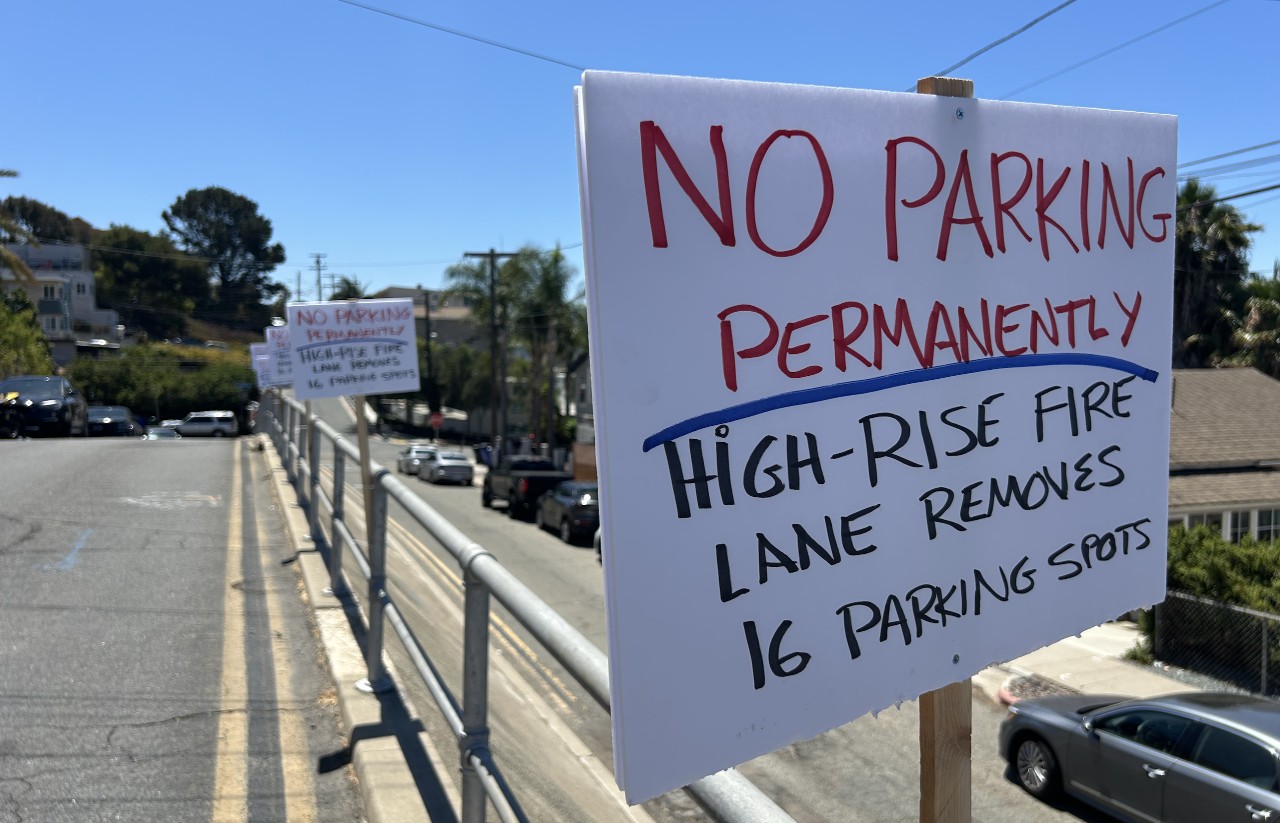
As California cities embrace increasingly aggressive upzoning, one consequence of these policies receives remarkably little attention: What happens psychologically to people when the future of their own neighborhood becomes permanently uncertain?
That question is particularly relevant as San Diego considers the First Draft Mid-City Communities Plan, which would guide land use and development in Mid-City for the next 30 years.

In San Diego, the argument for allowing substantially more housing in established single-family neighborhoods often comes with a reassurance: Don’t worry. Just because every property can be redeveloped doesn’t mean every property will be redeveloped.
But think about what residents are actually being asked to accept.
Your neighbor’s house may remain a house for another 30 years. Or it may be sold next year and replaced with a large apartment building. The house behind you may remain unchanged — or redevelopment may suddenly take away your privacy, sunlight, parking trees and the physical environment you believed you were buying into.
You don’t know.
And that is precisely the problem.
San Diego’s own Neighborhood Homes for All of Us program acknowledges this uncertainty. The city says where and when additional homes are constructed will depend upon individual property owners choosing to develop them. In other words, zoning creates the development opportunity today while the actual physical changes may unfold parcel by parcel for decades.
City leaders tend to present that uncertainty as reassurance. Residents experience it very differently.
Psychologists have long understood that uncertainty and lack of control can intensify stress. Research involving redevelopment has also documented the emotional consequences of waiting for unpredictable neighborhood change, including feelings of instability and displacement anxiety. Other research has examined how redevelopment can disrupt people’s attachment to place and neighborhood social cohesion.
That does not mean every zoning change causes a mental health disorder. It means planners should stop pretending that uncertainty has no human or community cost.
A neighborhood is more than buildings on parcels.
It is a network of relationships and expectations. People plant trees expecting to watch them mature. They renovate homes. They know which neighbors check on an elderly resident, whose children play together and who organizes the block party.
Stability encourages investment — not simply financial investment, but social investment.
When government fundamentally changes the development expectations for an established neighborhood, it can change how residents think about that future. Should I remodel my house? Should I plant that tree? Will my backyard remain private? Will the house next door become an investment property? Should I stay here?
Multiply those questions across hundreds or thousands of households and something important happens: uncertainty itself becomes part of neighborhood life.
It can also change residents’ relationship with government.
When people repeatedly voice concerns and are told that redevelopment may never happen, their actual objection has been misunderstood. They are not necessarily saying every parcel will redevelop. They are saying nobody can tell them which ones will.
That distinction matters.
The consequences may ultimately reach City Hall as well. Planning becomes more adversarial. Residents become distrustful. Public meetings become angrier. Planning staff must repeatedly defend policies they did not personally create, while elected officials face communities that increasingly believe decisions are being imposed rather than developed with them. It becomes more difficult to ask the public to increase taxes for transit and housing if the public thinks that money will be used as an excuse to further upzone their neighborhoods.
Those tensions are increasingly visible in San Diego’s planning debates. And that is unhealthy civic life for everyone.
San Diego needs housing. We can accommodate substantial growth along commercial corridors, transit routes and redevelopment areas while creating affordable and market-rate homes, walkable communities, jobs and stronger business districts.
But housing policy should consider more than theoretical unit capacity.
It should also consider stability, predictability, neighborhood attachment, community and social cohesion.
Good planning asks what and why we are building.
Great planning also asks what our decisions are doing to the people who already live there.
The psychological cost of uncertainty — and its consequences—belongs in that conversation.
Laura L. Henson is a resident of Talmadge.


