


A San Diego man who suffered third-degree burns from a portable ethanol burner called a “tabletop fire pit” is suing the company manufacturer and Amazon, saying that they intentionally sold defective devices and failed to warn that there was an explosion risk.
The lawsuit, which was filed Wednesday in San Diego Superior Court, says that Amazon and fire pit manufacturer Colsen had a duty of care to warn customers about this known danger.
“The Colsen Fire Pit was in a dangerous and defective condition when introduced into the stream of commerce by the Defendants,” said the complaint.
“The Colsen Fire Pit was so defective that when used in a way that was reasonably foreseeable, the potential risks of the Colsen Fire Pit created a substantial danger to users of the Colsen Fire Pit and others and could and would cause those serious injuries.”
Anthony Trevino, 31, bought the fire pit device in 2021. In 2025, he was using it on his balcony when the fire pit exploded, the lawsuit said. The jet of flame hit him directly in the face and body, leaving him with massive burns and subsequent scarring.
“Indeed the flame jet was so hot and powerful that it melted one of the decorative lights that Plaintiff had out on his balcony, charred part of the balcony fencing, and melted some of the artificial grass on the bottom of the balcony,” the complaint said.
In 2024, that exact model was recalled “due to risk of serious burn injury from flame jetting and fire spreading hazards.” In December 2024, the U.S. Consumer Product Safety Commission put out an alert for all such devices, saying that such fire pits violate voluntary safety standards and had resulted in at least two deaths and multiple burn injuries.
“Isopropyl (rubbing) alcohol, ethanol/bioethanol, and similar liquid fuels burn with flame temperatures over 1,600°F and can cause third degree burns in less than one second,” said the recall notice.
“The hazardous alcohol or other liquid-burning fire pits are sold by many retailers and e-commerce sites. CPSC urges consumers to immediately stop use and dispose of these alcohol or other liquid-burning fire pits, and for sellers to stop selling them.”
The agency also linked to a video demonstrating the phenomenon.
The lawsuit says that Amazon did send recall notices to customers, but the complaint alleges it warned only that the product “may not meet current safety standards” — not that it could potentially explode, causing third-degree burns.
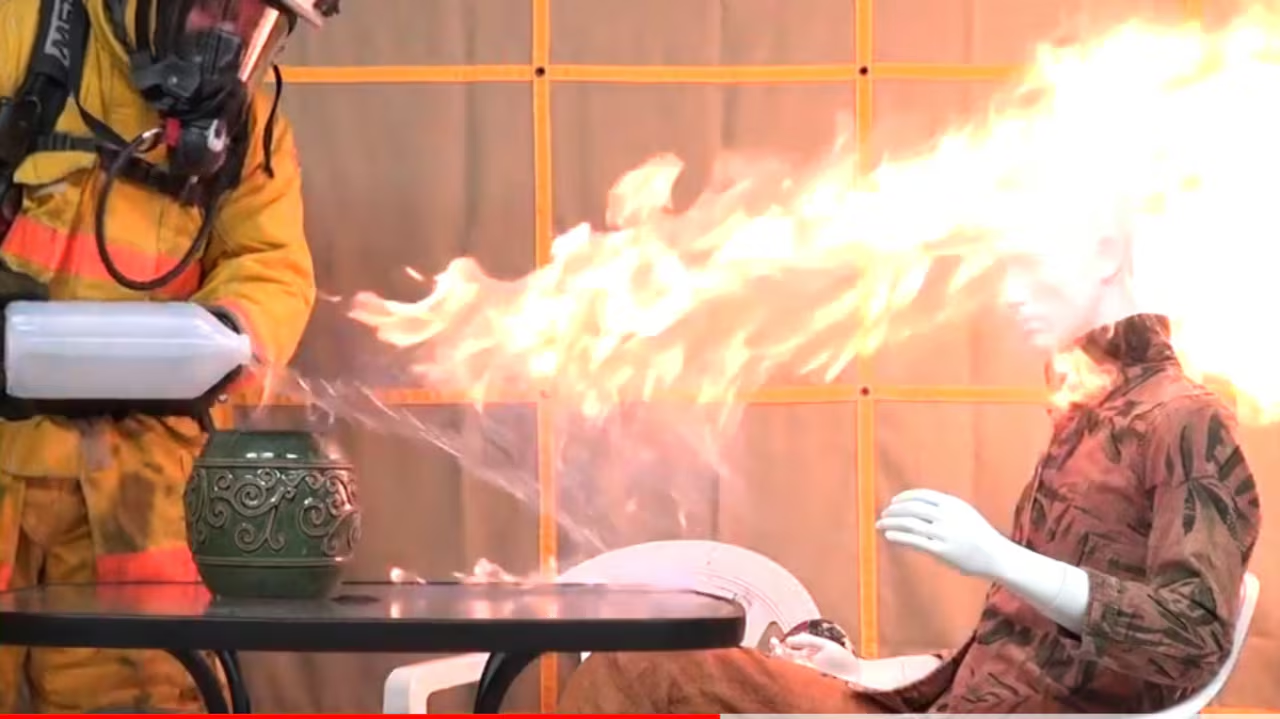
At the heart of Trevino’s injuries was a phenomenon known as “flame jetting,” essentially a sudden, very hot, and sometimes explosive flash fire.
“The issue with these little tabletop fire pits is that they burn pure alcohol, which has a flame that is very hard to see,” said Jeremy Robinson, an attorney who is representing Trevino.
That means it’s possible to assume the fire pit has run out of fuel when it is still alight.
“So when you start start pouring fuel into it creates this flame jetting which is sort of a flamethrower effect… Which can lead to tremendously gruesome injuries.”
The flame-jetting issue is so potentially severe and dangerous that it led to bans of the portable ethanol burners in Australia and Canada, Robinson added.
In June, two children and an adult were badly burned in Oceanside when a similar device exploded while the children were roasting marshmallows over it.
Trevino has already dealt with months of recovery and has been unable to work, but has years of recovery ahead of him — which could potentially be very painful, Robinson said. The lawsuit seeks monetary compensation for loss of earnings and medical expenses and other issues related to the burns.
“He has been able to return to work to some degree but he’s got a lot of scarring that’s esssnetially going to be permanent, and a lot of pain from that because it’s third degree burns… it’s extremely painful,” Robinson said. “He’s a tough guy and he’s a very inspiring person in terms of his resolve and his ability to hold things together… he’s doing the best he can.”
His attorneys say they hope to raise awareness of the dangers inherent in ethanol burners while they pursue Amazon, as well as manufacturers Colsen and Gusar.
“There aren’t any warnings on the products,” said Robinson. “The point we’re really trying to get across is how dangerous these things are — they don’t come with any warnings.
“We want people to understand if they have these types of products, they should get rid of them.”


