

There are places where hope is not an abstract idea but something tangible — something you can see, hear and experience. Places where a child takes their first step, a parent finally breathes easier, and a teenager finds quiet support during a difficult time. Places where a border becomes less of a dividing line and more of a bridge.
One of those places is the Hospital Infantil de las Californias in Tijuana, a project that today operates through the combined efforts of three sister organizations working on both sides of the U.S.-Mexico border.
Its story began 32 years ago, when northwestern Mexico lacked a pediatric hospital capable of serving the thousands of children who needed specialized care. The nearest options were in Hermosillo or San Diego, journeys that were simply out of reach for many families. Out of that gap emerged a cause that would eventually become a lifelong mission for the people who embraced it.
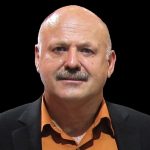
“This has been my cause for 32 years,” said Kathia Bustillos, president and CEO of the Foundation for the Children of the Californias, the U.S.-based nonprofit that supports the project from San Diego and coordinates donations, volunteer efforts and binational programs. Her office serves as a connection point linking hundreds of families, physicians and donors to the hospital.
She recalls the early days with a mixture of pride, affection and amazement. She first learned about the project when it was little more than an idea. At the time, she was working at Televisa when someone approached her with a vision: building a children’s hospital in Tijuana. There was no funding and no certainty that it could succeed — only the belief that children deserved better.
What began as “La Casita,” a small clinic where doctors provided consultations, surgeries and whatever care they could manage, gradually evolved into a modern, accredited hospital with more than 25 specialties and more than 9,000 children treated each year.
Today, Hospital Infantil de las Californias is a regional leader in pediatric care. Every building, treatment room and expansion tells the story of a collective effort involving Padres de San Diego volunteers, the Colonel Harland Sanders Foundation in Canada, anonymous donors, grateful families and physicians who regularly cross the border to serve children in need.
Supporting this effort is Fundación para los Niños de las Californias, the Mexican nonprofit that oversees local fundraising, volunteer programs and community initiatives within Mexico (+52 (664) 973-7325 ext. 109). Together, the three organizations form a binational network that sustains both the hospital’s operations and its community outreach programs.
But the real story is found in the children.
It can be seen during the Binational Rehabilitation Clinics, where wheelchairs, walkers and braces donated by people who may never meet the children who receive them arrive in Tijuana. Healthcare professionals travel from Los Angeles and San Diego to fit, adjust and customize each piece of equipment.
And then come the moments that make the work worthwhile: a child who has never walked takes their first steps. Another, who had always depended on being carried, sits in a wheelchair that gives them mobility and independence for the first time.
“That’s their first day of independence,” Bustillos said, her voice briefly catching with emotion.
There are also surgical missions, such as a recent strabismus program during which 62 children received corrective eye surgery free of charge over a single weekend. Genetic health clinics help families with inherited or recurring medical conditions better understand their circumstances and make informed decisions about future care.
The services are available regardless of nationality.
“We welcome everyone — Mexicans, Americans, Haitians, anyone who needs help,” Bustillos said.
Mental health has become one of the organization’s most urgent priorities. Demand surged following the pandemic, prompting the hospital to expand its behavioral health clinic, hire additional psychologists and launch binational programs such as Puentes de Bienestar (Bridges to Wellness).
The initiative provides young people ages 7 to 18 with up to ten free telehealth counseling sessions. It also includes an artificial intelligence-based emotional support app featuring a panic button connected directly to 911 services. For many adolescents struggling with emotional challenges, it serves as a quiet but critical lifeline.
Education is another key part of the mission.
The annual Binational Pediatric Symposium, held alternately in San Diego and Tijuana, brings together healthcare specialists from both countries to address urgent health concerns such as rickettsial diseases, measles and childhood obesity.
“Diseases don’t recognize borders,” Bustillos said.
In a region where thousands of people cross the international boundary every day, medical collaboration is not a luxury — it is a necessity.
The foundation recently assumed responsibility for the Care ’N Share Toy Drive, a program that has distributed more than 122,000 toys to organizations in San Diego and Tijuana since 2009.
For many children, those toys are the only gifts they will receive all year. Small gestures that can brighten an entire childhood.
The hospital is now preparing to open several newly renovated facilities, including an expanded mental health clinic, a nutrition center — especially important in a region facing high rates of childhood obesity — and a pediatric dentistry clinic.
Plans are also underway for Betty’s Kitchen, a teaching kitchen where families will learn how to prepare nutritious meals on limited budgets. The project combines education, health and dignity in a practical way that can improve everyday life.
Throughout the conversation, Bustillos repeatedly returns to a simple message: everyone can contribute.
Whether through financial support, volunteer service, professional expertise or simply showing up, she believes that everyone has something valuable to offer.
“Everyone has something to give,” she said.
The hospital’s history is proof that when a community commits to caring for its children, borders become far less important.
Thirty-two years later, the mission remains alive — stronger, broader and more urgent than ever. And it still needs helping hands, generous hearts and committed supporters to reach more children.
Because, as Bustillos puts it, “it’s not about us. It’s about them.”
For more information
Individuals interested in supporting the organization can call (619) 400-5999 or visit usfcc.org.


