


Hollywood camels came to San Diego in 1923.
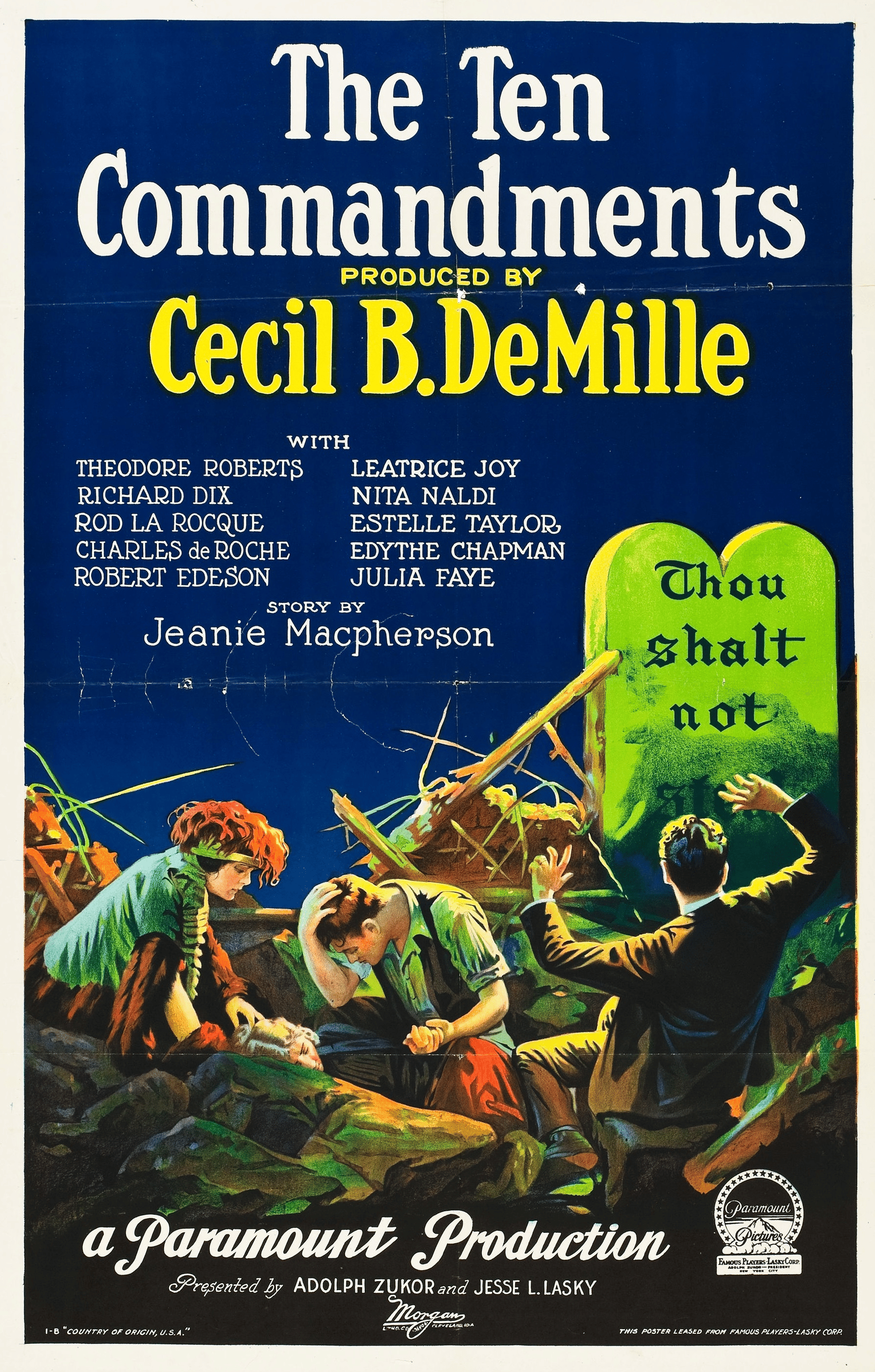
The three animals were part of a large motion-picture herd assembled by the Lasky Film Co. for scenes in Cecil B. DeMille’s “The Ten Commandments,” the spectacular 1923 silent film.
On June 19, 1923, the San Diego Union reported that three camels from the movie herd were coming to San Diego. Five days later, the newspaper reported that three camels were in temporary quarters at the San Diego Zoo in Balboa Park while permanent quarters were being built.
It was the beginning of a remarkable San Diego camel story that would eventually include a Zoo-born movie star, Hollywood film sets, and a camel named Sheik.

Hollywood’s camels arrive
The San Diego History Center’s 1923 Balboa Park chronology preserves the newspaper record of the arrival. The June 19 report said three camels from a large motion-picture herd assembled for “The Ten Commandments” by the Lasky motion-picture establishment were coming to San Diego.
The Zoo’s own historical timeline provides another piece of the story. In 1923, the Zoo received two dromedary camels, “Turk” and “Scar,” from Lasky Film Corp. A Bactrian camel named “Dick” came from Ringling Circus.
The surviving records establish the Lasky connection, but they do not establish that “Turk,” “Scar,” and “Dick” were necessarily the exact three animals mentioned in the June 19 newspaper report. What is clear is that movie camels and the young San Diego Zoo became connected in 1923.
The connection was immediately part of the Zoo experience. By August, the San Diego Union was reporting that children and adults were enjoying elephant and camel rides at the Zoo.
The Army’s camel experiment
San Diego’s camel story began in another era.
In 1855, Congress appropriated $30,000 for an experiment to determine whether camels and dromedaries could be used for military transportation in the arid Southwest. The government purchased animals in the Middle East and North Africa, including one-humped dromedaries and two-humped Bactrian camels.
The animals were used in government transportation and surveying experiments, including expeditions associated with Edward Fitzgerald Beale. In California, some of the government camels spent several months at Fort Tejon beginning in 1859.
The animals were government property, not members of a formal military “Camel Corps.” The Fort Tejon Historical Association notes that the camels remained there for only about 5½ months and were not used by the soldiers stationed at the fort.
The experiment eventually ended. The remaining California herd was moved north to Benicia, where the camels were auctioned in February 1864.

‘Scar’ has a calf
Back at the San Diego Zoo, “Turk” and “Scar” produced something the Army experiment never did: a camel born in Balboa Park.
In 1924, “Scar” gave birth to “Sheik,” the first camel born at the San Diego Zoo. The Zoo’s historical timeline records the birth and identifies “Sheik” as a male.
The young camel would soon have a career of his own.

‘Sheik’ goes to Hollywood
In 1926, “Sheik” became a movie animal himself.
The San Diego Zoo’s historical timeline records that Sheik starred in “Beau Geste” and also appeared in “Ben-Hur.“
The relationship between the Zoo and Hollywood continued. During the Zoo’s early years, animals were loaned to film companies as extras in feature films, providing the young institution with additional income. Camels were particularly useful because desert stories were frequently filmed in Southern California and Arizona.
By 1939, “Sheik” and other San Diego Zoo camels were still making the trip to movie sets.
From Army experiment to movie star
The camels that arrived in San Diego in 1923 had been connected to one of Hollywood’s biggest spectacles, “The Ten Commandments.“
One of those Zoo camels, Scar, became the mother of “Sheik.” And “Sheik,” born at the San Diego Zoo, became a movie animal in his own right.
The military camel experiment of the 1850s and the Hollywood camel herd of the 1920s had entirely different purposes. One was an attempt to solve a transportation problem in the American West. The other was intended to create movie spectacle.
But both chapters became part of San Diego’s history.
For the San Diego Zoo, the story began with camels connected to Hollywood.
It continued with “Turk” and “Scar.”
And it produced “Sheik,” a camel born in Balboa Park who became a movie star.
Read more history stories here. Do you have a story to tell? Send an email to DebbieSklar@cox.net.
Sources:
- San Diego History Center, “Balboa Park History 1923.”
- San Diego Zoo Wildlife Alliance Library, “San Diego Zoo Wildlife Alliance Timeline.”
- San Diego Zoo Wildlife Alliance, photograph of Scar and her calf, Sheik.
- San Diego Zoo Wildlife Alliance, “Film Star Camels, 1939.”
- Library of Congress, “Report of the Secretary of War … respecting the purchase of camels for the purposes of military transportation,” 1857.
- Fort Tejon Historical Association, “The Mythical Fort Tejon ‘Camel Corps,'” by George Stammerjohn.


