


Encinitas has a way of hiding its history in plain sight.
Beneath today’s surf culture, cafés, and coastal neighborhoods are traces of very different eras: a silent film actor who invested in early town lots, a historic movie palace still operating downtown. This cliffside spiritual retreat gave a surf break its name, and flower fields that once helped define the region’s economy.
Most of it is still there — if you know where to look.
A silent film actor invested in Encinitas real estate
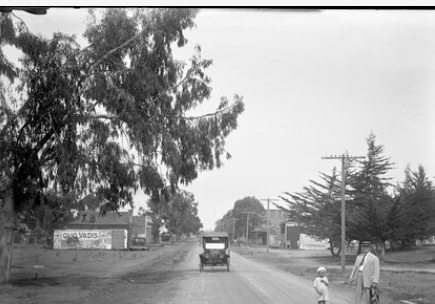
Sydney Chaplin, the older brother of Charlie Chaplin, purchased acreage in Encinitas in 1923 during a coastal land boom, paying about $5,000 for property along what was then a developing stretch of Highway 101.


According to historian Lisa Stein Haven’s biography, Syd Chaplin: A Biography, and historical Los Angeles Times records, the site is linked to land that later became part of the 1st Street Bar property footprint.

At the time, Encinitas was still transitioning from farmland into a coastal townsite, and Chaplin was among several early Hollywood figures investing in Southern California real estate.
A silent film-era theater still anchors downtown

The historic La Paloma Theatre opened in 1928 and remains one of the oldest continuously operating movie theaters in San Diego County. Built during the final years of the silent film era, it quickly adapted to the arrival of sound films and never closed its doors.
Through decades of change in downtown Encinitas, it has remained a constant presence — one of the most visible surviving links to early twentieth-century entertainment along the coast.
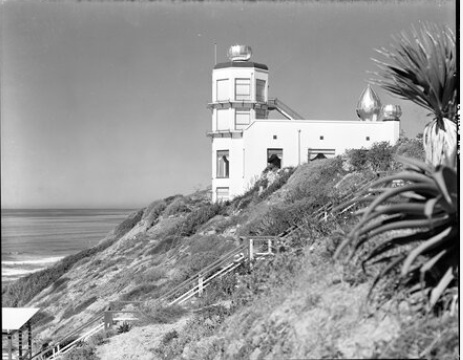
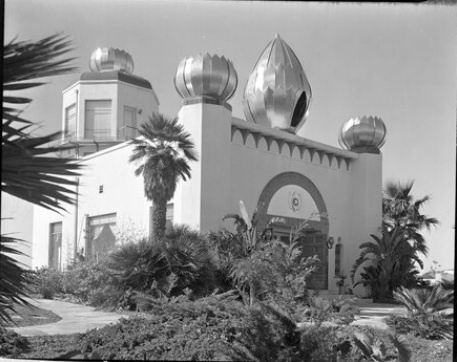
A cliffside retreat helped name a famous surf break
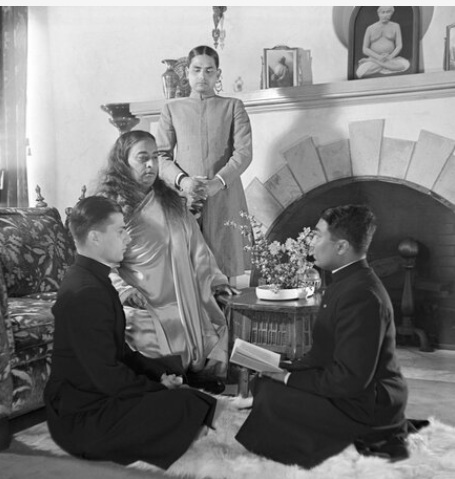
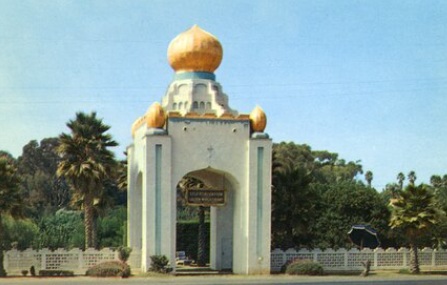
Above Swami’s Beach sits a meditation center established in the 1930s by followers of Paramahansa Yogananda, later becoming part of the Self-Realization Fellowship.


Surfers began referring to the break below as “Swami’s,” a name inspired by the spiritual community on the bluff. It stuck — and eventually became one of Southern California’s most iconic surf spots.
Flower fields once defined the coastal economy
For much of the 20th century, Encinitas and the surrounding coastline were covered in flower fields and greenhouses that supplied blooms across the United States. The Paul Ecke operation played a major role in transforming poinsettias into a nationwide holiday plant and helped establish the region as a center of commercial horticulture.

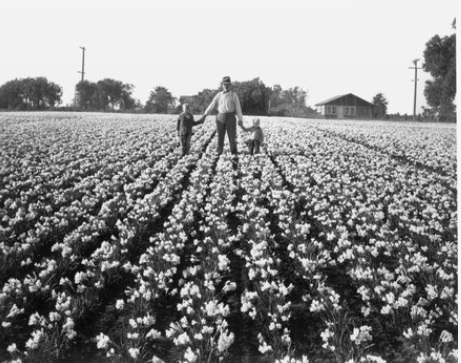
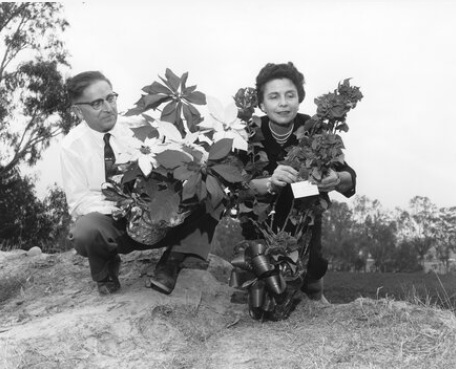
At its peak, Highway 101 ran past active cultivation zones and roadside flower stands, long before housing and commercial development reshaped the corridor into what it is today.
Olivenhain still reflects its original rural design
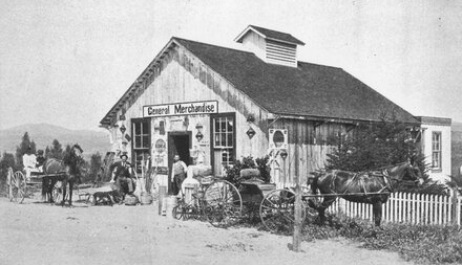
The inland community of Olivenhain was founded in the 1880s by German homesteaders under the Homestead Act. They built a rural agricultural settlement organized around large parcels, open space, and self-sustaining land use.
Unlike the coastal areas that evolved into dense, surf-oriented cities, Olivenhain retained much of its original layout. Its winding roads, equestrian properties, and larger lots still reflect Encinitas’ early rural identity.
Much beneath the surface
Encinitas may look like a unified beach town, but its history is layered beneath the surface. Silent film–era investors, a landmark theater, a cliffside spiritual retreat, a once-dominant flower industry, and a rural homesteading community all helped shape the city that exists today.
In Encinitas, history doesn’t disappear — it changes form, often hiding in plain sight.


Read more history stories here, and do you have a story to tell? Send an email to DebbieSklar@cox.net.
Sources:
Sydney Chaplin’s Encinitas property purchase, based on historian Lisa Stein Haven’s biography Syd Chaplin: A Biography, and Los Angeles Times archival records.
La Paloma Theatre historical and official theater documentation.
Self-Realization Fellowship Encinitas Hermitage historical materials.
Paramahansa Yogananda biographical and organizational archives.
KPBS reporting on the Ecke family and poinsettia industry.
CSU San Marcos Special Collections (Ecke Family archival materials).
Los Angeles Times archives on Southern California agricultural development.
Encinitas Historical Society materials on Olivenhain settlement history.


