


The history of La Mesa is often reduced to a familiar outline — a trolley-connected suburb, a walkable village, and a citrus-growing past tied to East County development.
But that version leaves out quieter details preserved in regional historical records: early ads, environmental features that influenced settlement, and a brief intersection with the silent film era that is less commonly referenced in general histories.
“Most people recognize La Mesa today as a family-oriented suburban community that expanded significantly in the post–World War II period,” said Jim Newland, historian and author at the La Mesa History Center. “While that is a defining part of its modern identity, its earlier history includes a wider range of development phases and influences that help explain how the city evolved.”
What follows are five lesser-known but historically grounded stories about the city’s past.
La Mesa was part of Southern California’s early ‘health climate’ promotion era
In the late 19th and early 20th centuries, inland Southern California communities were widely promoted for their perceived health benefits, particularly among Eastern migrants and settlers.
La Mesa was included in this broader regional marketing trend. Contemporary materials emphasized dry air, elevation, and distance from coastal humidity as desirable qualities for settlement. This framing was common across San Diego County and helped spur early residential interest in inland communities.
Natural springs influenced early land use around Collier Park
The area now known as Collier Park is historically associated with natural springs referenced in early development accounts.

These water sources contributed to early land use patterns and local interest in the area during the late 1800s and early 1900s. A preserved spring feature within the park reflects this earlier phase of development.
While some later interpretations expand on their significance, the documented historical record confirms the presence of springs and their role in early land use, such as in agricultural endeavors.
Citrus agriculture was a defining early land use
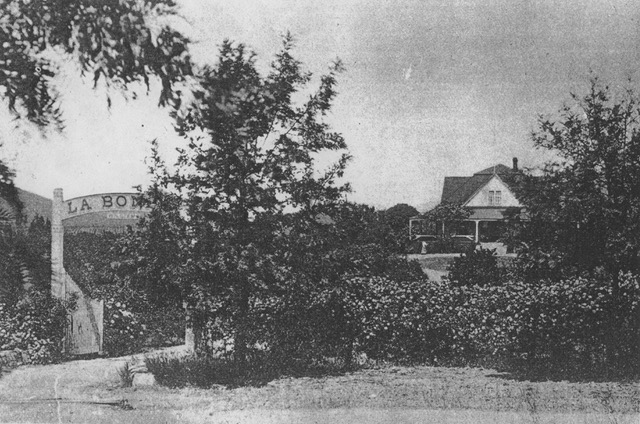
Lemon and orange groves covered much of the landscape, supporting agricultural activity tied to packing, shipping, and regional distribution.
This agricultural era declined after World War II as residential development expanded across former orchard land, reshaping the area into a suburban community.
La Mesa had a limited connection to early silent film expansion through Allan Dwan

During the early silent film era, filmmaker Allan Dwan worked with Flying A Studios during a period when film production was expanding across Southern California beyond Los Angeles.
This early industry phase (circa 1910s) involved dispersed production activity across multiple communities before filmmaking became centralized in Hollywood.
La Mesa appears in local historical references connected to this broader regional film footprint, but it was not a sustained production center. Its significance lies in its proximity to a transitional moment in early California film history, rather than a long-term industry presence.
La Mesa developed in layers rather than a single growth period

The city’s development occurred across multiple overlapping phases rather than a single expansion event.
These include regional ranching and land-use patterns, late 19th-century rural settlement, citrus agriculture, and post–World War II suburban expansion.
Together, these layers shaped La Mesa’s current form as a community reflecting multiple historical periods rather than a single defining era.
Read more history stories here and send an email to DebbieSklar@cox.net.
Sources:
La Mesa History Center interpretive materials and local historical summaries.
City of La Mesa historical documentation and preservation records.
San Diego County agricultural history references (citrus development patterns)
Regional Southern California development histories (late 19th–mid 20th century settlement patterns and “health climate” promotion era)
Early California film history sources (Flying A Studios / Allan Dwan silent film context.


