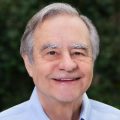
The San Diego scientist whose team created a synthetic bacteria cell in March said Thursday building a life form is essential to answering what life is.
“The only way to answer that was to actually design it and build it,” said J. Craig Venter, founder of the J. Craig Venter Institute in La Jolla.
Venter, who led the team that first sequenced human DNA, described the process of creating new life — the bacteria JCVI-syn3.0 — in a talk at the Reuben H. Fleet Science Center.

Scientists at the institute and nearby biotech Synthetic Genomics designed a cell with the minimum number of genes thought necessary for life, but then had to add back genes. They found the minimum was 472, compared to 20,000 for a human being.
“It was a trial and error process,” he said. “We started adding back genes until we could get life again.”
“The final answer was surprisng to everyone. For a third of the genes in this minimal cell, we had no idea what they did. Now the challenge is to try to understand these unknown genes.”
Venter likened DNA — and life — to computer software, with cells constantly referring to their DNA code to repair and replace themselves.
“We are DNA software machines,” he said. “If we remove your DNA, you will live a very short period of time.”
He co-founded Synthetic Genomics to develop commercial applications of synthetic life, from fuel-creating microbes to new vaccines to new food sources.
“If we can actually design life to make it do what we want to do, it’s the basis for a new industrial revolution,” he said.
Venter was questioned in the Heikoff Dome Theater by Dr. Steve Snyder, CEO of the Fleet Center. Snyder said it is important for San Diegans and the city’s many visitors to understand the city’s emergence as a major science center.
“San Diego is clearly one of the most significant science centers in the world,” Snyder said. “Amazing work is happening here all the time. And yet, if you talk to people in San Diego, most don’t have any idea.”