


Theaster Gates is an urban planner, artist and a professor at the University of Chicago in visual arts. In 2019 he received the prestigious Urban Land Institute’s J.C. Nichols Prize for Urban Development.
“Many cities are looking to reinvent themselves, and Theaster’s work represents art and culture as important elements of reinvention,” said Michael Spies, the Nichols Prize jury chairman. Recognition by this respected international real estate organization becomes a powerful justification for art being at the core of community and economic development.

Meanwhile, Mayor Todd Gloria is proposing to cut $11.8 million from the arts and culture grant program to help shore up the overall $118 million city budget deficit in the next fiscal year. The majority of the San Diego Union-Tribune’s “Econometer” expert panelists stated that the arts are a nice to have amenity, but the city needs to make difficult budget decisions.
We beg to differ. The impact of the arts cannot be commodified on a spreadsheet.
The arts are part of what makes a community. They are not always noticed and sometimes not considered to be art but over the years many San Diego improvements, artistic and physical, have been funded under the umbrella of art.
In 1990, the Gaslamp Quarter entry sign was installed and labeled as public art. It could not be permitted under the zoning ordinance for signs. Some of the funding came from arts money. Subsequently, all neighborhood markers are now categorized as public art. They are a symbol of identity and neighborhood pride.
The branding of the Gaslamp quarter is broadcast to the world and helps draw conventioneers and visitors that helps the tourism sector thrive. The Gaslamp Quarter’s entry sign exemplifies the financial value of artful neighborhood identity signs.
The rebuilding of the termite-ridden wooden bridge in Uptown that crosses Washington Avenue was at the bottom of the Capital Improvement Program list. Then it was cleverly redesigned as an art piece and partially funded with arts money. In addition to being a work of art, it also reconnected neighborhoods, made the area easier for biking and walking and brought more customers to University Avenue businesses. It totally fits with planner John Nolen’s coined phrase “Beautility”
Other physical things that foster community building include art districts, wall murals, utility box artwork, community fairs and concerts.
In the 1960’s artists began moving into the Gaslamp Quarter, sharing the neighborhood with X-rated bookstores, locker clubs for sailors and go-go dance halls. The artists and the preservationists of that time began the great transformation of the Gaslamp Quarter.
With the success of the Gaslamp Quarter, the artists were pushed further east to occupy old warehouses and sewing factories that became vacant as the garment trade moved to Asia.
The conversion of warehouses in seedy parts of town to artists’ lofts is a trend across time and place. In the 1990s the city of San Diego received funding to study how to make these buildings safe for residential and office occupancy or artists’ lofts. The Ratner/Hang Ten building at Park and F Street was the test case. San Diego architect and developer Bruce Dammann ran the study that led to building code changes. One of the new anchor tenants was the NewSchool of Architecture and Design.
In 1990, artist Mario Torero had the opportunity to paint his Eyes of Picasso mural on the side of the former Carnation Building at Tenth Avenue and J Street. The downtown neighborhood was sorely neglected and filled with vacant buildings, littered sidewalks and was a collecting place for people without homes. The Eyes of Picasso mural had moved around to several locations previously. When the buildings were renovated, the mural was painted over. The mural became a symbol for attracting investment into dilapidated areas.
The visionary owner of the building — architect, developer and overall bolt of lightning Wayne Buss — renamed the building the ReinCarnation. He incorporated the Torero mural into his adaptive reuse project which included commercial, residential, artist lofts and galleries. His project became the creative heart for the transformation of the entire neighborhood, which the community named East Village. The thriving neighborhood is now the home of Petco Park and thousands of residential homes.
The Eyes of Picasso mural then moved east from the Gaslamp to the Bronze Triangle. The image of the art was projected onto the side of a building owned by the San Diego Unified School District. The community wanted affordable housing built there. The community vision was led by neighborhood leader and daycare business owner Gale Walker, a social entrepreneur extraordinaire. She brought the community together over the course of several years in the early 2000s to plan for what they wanted. After the Great Recession, in 2015, Bridge Housing completed Paseo at Comm22, a transit-oriented, 250-unit affordable housing project.
In 2001, Ray at Night Artwalk in North Park was born. It was a monthly art event created by San Diego painter and jazz singer Dorothy Annette and a team of other artists. The event celebrated art, music, food and fun. This event helped fan the flames to make North Park one of the trendiest neighborhoods in the country.
Barrio Logan has a rich arts and culture history. The famous Chicano Park National Landmark was established in 1971. It is a park filled with murals located on the structure holding up the freeway that when built cut the neighborhood in half. In the last 10 years a creative spurt has occurred. Many artists and architects have moved into the neighborhood which has attracted new events, restaurants and retail businesses.
New emerging art districts include the nine-block Black Arts + Culture District in Encanto which will become a place for the community to gather and a proposed downtown Arts District as part of the Civic Center redevelopment. A conversion of Golden Hall by Mesa College will include a gallery and housing. It will become part of the link on the C Street corridor from Santa Fe Depot to City College and San Diego High School.
Theaster Gates’ core philosophy is, “Beauty as a basic service.” It has been undeniably proven for decades that art is a catalyst to revitalize neighborhoods, bring communities together and accelerate reinvestment. Let’s not lose sight of this.
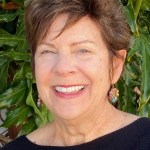
Michael J. Stepner is a former San Diego City Architect and professor emeritus of the New School of Architecture and Design. He is the recipient of the 2024 AIA San Diego Lifetime Achievement Award. Mary Lydon, the principal of Lydon Associates, has held leadership roles within the Urban Land Institute, the Downtown San Diego Partnership, and Housing You Matters. She also served on the San Diego Planning Commission.


