


San Diego’s annual architecture awards announced winners of the fragrant Orchids and reviled Onions on Oct. 2. The Orchids & Onions awards have been a San Diego Architectural Foundation tradition for 50 years, to honor thoughtful, beautiful design and point to projects that mar the landscape.
Following community nominations, a jury assembled selected this year’s winners and losers. This year’s panel was generous, issuing only one Onion while delivering a bouquet of a dozen Orchids. The projects span from Del Mar to Jacumba and even into Tijuana. Here’s a look at the winners.
Historic Preservation: CHAPEL at Liberty Station (2881 Roosevelt Rd.)

The Navy’s North Chapel at Liberty Station has been an important location for generations since it opened in 1942, with many couples married and lost lives commemorated beneath its stained glass windows. Although Liberty Station has since changed hands, the rebranded Chapel still exists as a venue serving San Diegans.
In honor of the U.S. military’s 250th Anniversary, the Chapel’s current owners, Snake Oil Venue Company, renovated the chapel. The new owners restored the original Douglas fir wood floors, beams, historic stained glass and baptismal font while breathing new life into a non-denominational altar, nave and transept.
Since the building served as the spiritual home for Navy recruits, many veterans returned to share stories of what the building meant to them. Snake Oil staff members described the experience as deeply moving and a highlight of their career in comments on the Architectural Foundation’s nomination site.
“This experience has reminded me that historic preservation is about so much more than restoring a building,” wrote executive Heather Cramer. “It’s about honoring the people, memories, and stories that give that building meaning while ensuring they aren’t lost as the space begins its next chapter.”
Revitalization: Granger Hotel (964 Fifth Ave.)

The Granger Hotel is one of the few historic Romanesque buildings in San Diego, and its refresh reminds locals why this grandiose building is an architectural treasure. Owners Kevin and Alvin Mansour, of Oram Hotels, honored this historic Gaslamp hotel’s legacy in the city while incorporating contemporary art and layered design elements to its interior during a $30 million renovation of the building.
The hotel owners preserved its elaborate roofline, decorative fourth-floor windows, original façades, and majestic 12-foot windows on the outside. Inside, 120-year-old entry doors and original ceilings were carefully restored. Many of the additions to the space are vintage or hand-crafted items, as design came first in this revitalization. Through residencies and partnerships with contemporary artists, new pieces seamlessly integrate with its past craftsmanship.

Interior Design: Starlite Bar (3175 India St.)
Two Consortium Holdings projects made the Orchids list, as the aesthetics-driven hospitality group continues to revive historic San Diego venues, including the lauded Lafayette Hotel. This more modest project, the Starlite Bar at 3175 India St. in Middletown, preserved the storied restaurant’s look while bringing in new elements like a sculptural bar and warm atmospheric lighting. Outside on the patio, plants sprout between marble tables.

“Starlite’s design has such a distinct sense of identity, which is harder to pull off than people realize,” wrote a supportive commenter, Tessa. “Every element of design feels considered without feeling overly curated.”
Private Architecture: Kaya (2710 3rd Ave.)

Amid a building boom, current residents are frequent critics of new boxy towers flush with much-needed housing, particularly only when bright paint or the occasional deck breaks up the rectangular look.
From afar, the 78-unit multi-family building Kaya is another gray tower. But instead of one tower with enclosed hallways keeping residents inside and the rest of the city out, architect Jeff Svitak designed it with four slim towers with all walkways, corridors and common-area patio bridges outside. It is a porous development blurring the division between the building and the nature and neighborhood of Bankers Hill. A ground floor cafe opens onto Olive Street Park.
“Beautiful building, with great street and park activation. Even if you are not a tenant, you can really engage with and enjoy this building,” wrote Ivan Rimanic, principal at De Bartolo Rimanic Design Studio.
The blend of outdoors and indoors also has environmental benefits to offset cooling costs so close to the coast. The nomination form noted that the simple material palette and exposed concrete also support durability and long-term use.
Private Architecture: Leparc (2820 Polk Ave.)

Kaya in Bankers Hill and Leparc in North Park have a similar approach to bringing airy, porous architecture to a tower build. As the two winners in the private architecture category, the Architectural Foundation is signaling support of a new trend in major developments as the city grapples with increased density and infill housing.
Like Kaya, Leparc has individual towers inviting daylight and fresh air into the tight 5,000-square-foot site. Its silhouette is also unique thanks to inverted, slanted roofs. Leparc sports massive windows so every unit has open access to natural light and air. All common areas also have windows so tenants can look out onto the city while passersby can view inside.
Contractor Build Solid also used an environmentally-friendly and local approach to materials and construction. Masonry units were manufactured just 11 miles from the site, using solar-powered production, recycled materials and low-carbon processes, according to the nomination entry. All leftover or damaged blocks were returned and reused to make new blocks—closing the loop on material waste.
Revitalization: Jacumba Hot Springs Hotel (44500 Old Highway 80)

The rural community of Jacumba has been a travel destination in the high desert known for its hot springs since the 1920s. But the construction of Interstate 8 in the 1960s, which bypassed the town, plunged it into economic ruin as tourism dried up. The town’s hotel crumbled away until three friends, Jeff Osborne, Melissa Strukel and Corbin Winters, bought the hotel in 2020 for $3.9 million, along with most of the town of 600 people, which sits on hotel property. Osborne, a real estate investor, and interior designers Strukel and Winters remodeled the hotel, and a gas station, several houses and storefronts, a roofless bathhouse and empty lake.
The trio imbued the hotel with beauty and elevated design never before seen at the location. The adobe buildings are filled with hippieish Southern California charm while the desert remains the main event, as the natural ground makes up the flooring on outdoor spaces.The hotel offers three pools fed by hot springs for guests and locals alike.
Local lava rock was gathered to cover walls and planters. Reclaimed wood from the former hotel was reused as gates and doors. It feels natural and elegant, harkening back to when Jacumba was a destination for the Hollywood elite that rivaled Palm Springs.
Interior Design: Café Cometa (Antonio Caso 2020, Tijuana)

The Architectural Foundation has handed out interior design awards to maximalist commercial spaces stuffed with overwhelming colors, textures and patterns. The sleek but intentional Café Cometa in Tijuana is a sharp contrast, showing that beauty does not contradict simplicity. It reduces visual noise in a functional kitchen made of stainless steel with wood planks that add warmth to the floors, walls and ceiling.
The cafe was built on the corner of a restaurant parking lot, owned by Chef Adria Marina. It turned underutilized space into a lively cafe, demonstrating that even small architectural interventions can improve the urban landscape.
In one of the only eye-catching details, glass-covered pastry platters sit atop precarious raw stone columns wrapped in metal.
The restrained design from Diseño Norteño places the focus on the people.
“Civic value isn’t about scale,” wrote architectural photographer Lorena Darquea. “Love that the architecture stays quiet and lets the everyday life of the café take over.”
Landscape Architecture: Elephant Valley (15500 San Pasqual Valley Rd.)

Since its opening at the Safari Park in February, Elephant Valley puts visitors so close they can hear, and even smell, the elephants. The Architectural Foundation is drawing attention to the landscaping, plants and design that facilitate those awesome encounters with nature.
Elephant Valley received the only Landscape Architecture Orchid this year. The exhibit combines African-inspired botanical selections with real-world methods deployed in Africa to promote elephant-human coexistence, like talking sticks, coffee barrels and traditional beehives.
The plants also provide shade and enrichment for the herd while contributing to San Diego’s biodiversity.
The nomination page praised the design for “transforming a vast site into a functional, memorable ecosystem that fosters a deep connection between the San Diego community and global conservation.”
Public Architecture: Pacific Highlands Ranch Library (12911 Pacific Pl.)

San Diego city’s 37th branch library opened as a community hub in Pacific Highlands in 2024.
The $28 million library project was fully funded by developer fees in the fast-growing areas of Pacific Highlands Ranch, Black Mountain Ranch, Torrey Highlands and Del Mar Mesa. The Architectural Foundation awarded it as this year’s most thoughtful public architecture project.
The area has agrarian roots showcased by the blend of flexible indoor and outdoor spaces. Inside, the building is light and airy, while outside it has porches for the community. Its most notable feature is a public art installation incorporating English, Spanish and Kumeyaay language.
Adaptive Reuse: Baby Grand Hotel (1315 Orange Ave.)
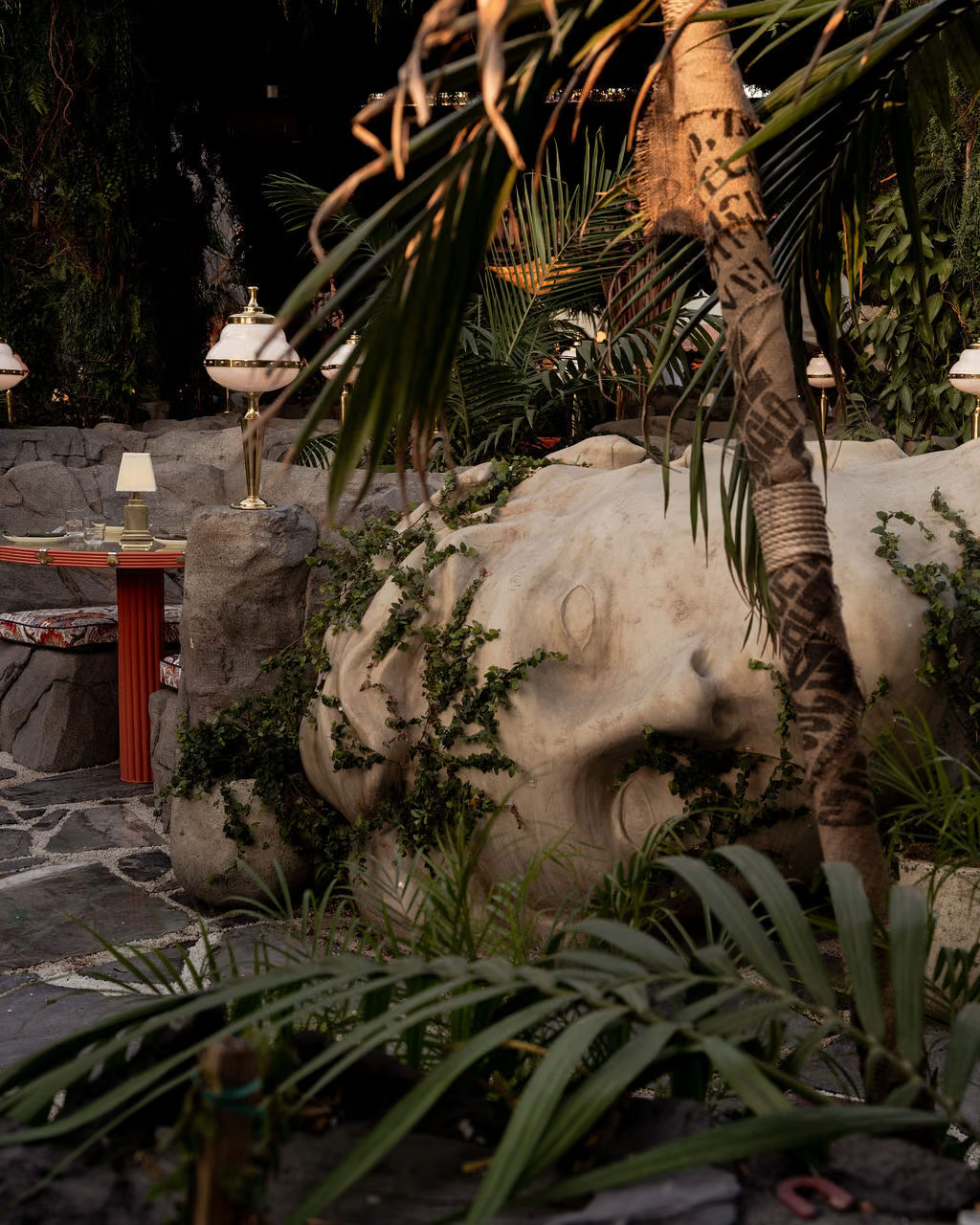
The second Consortium Holdings property among the Orchids is Coronado’s Baby Grand Hotel. It’s the second collaboration between CH Projects and design studio Post Company, after the successful remodel of the Lafayette Hotel in North Park.
The new 31-room boutique hotel turned a parking lot into an overgrown landscape of small pools, a waterfall, “jewel box” bars, open-fire dining, rock formation seating and hidden sculptures.
The design is meant to evoke a long-forgotten hotel reclaimed by nature. Some features are Romanesque, while others are Turkish and Moroccan. Through tent structures and planted trellises, it also celebrates aspects of Coronado’s history, like the Hotel Del’s Tent City, which operated from 1900 to 1938 as accessible luxury. The Baby Grand has cheaper rooms than today’s Hotel Del Coronado too. Plus, the space has two restaurants: the outdoor Night Hawk and the intimate Fallen Empire, the reservation-only bar made of mirrored brass.
Miscellaneous: UCSD-Casa Community Station | Living Rooms at the Border (114 W Hall Ave.)

Two buildings in a new UC San Diego experiment won Orchids this year, with one garnering the Grand Orchid. Both fell into the miscellaneous category but were awarded for their unique approach to co-development along the border in projects that combine affordable housing and social and educational programming.
So far, UCSD has built two of these “Community Stations” in southern San Diego and two in Tijuana. In each, the university partnered with a grassroots organization to build affordable housing and a community gathering spot along the border. Once built, the university co-programs the space with artistic, community and educational events.

The San Diego-side winning Community Station was co-developed with Casa Familiar, the 30-year-old organization that provided childcare for unaccompanied minors held at the Convention Center in 2021. The Community Station is named Living Rooms at the Border and is located in San Ysidro.
For Living Rooms at the Border, developers rescued an historic church in disrepair. The church was turned into a theater connected to an outdoor stage. They also added a pavilion and small units for programming. In addition, a 6-plex and 4-plex on opposite ends of the lot bring 10 units of affordable housing.
Grand Orchid Miscellaneous: UCSD-Embajadores Community Station | Santuario Frontera (Calle Cañon del Alacrán, Tijuana)

A second UCSD Community Station won this year’s Grand Orchid. Located in Tijuana at Alacrán Canyon, Santuario Frontera was co-developed with Embajadores de Jesús, run by Pastor Gustavo Banda. The canyon has become a settlement where 100,000 global migrants camp while waiting to cross the border. The UCSD-backed housing project is now the largest sanctuary along the US-Mexico border.
In addition to providing housing, the project supported migrants by employing them to build the complex in a live-work model. The project has also extended past housing, with a sports complex, educational site, and future plans to build more. The standard for migrant camps of the past has been building as much temporary housing as possible. UCSD and Embajadores took a holistic approach, building places for congregate dining, healthcare, education, job training and recreation for families who may stay for years. In essence, UCSD built a permanent neighborhood for migrants in Mexico that may be used as a model for future migrant settlements.
The resulting “participatory” architecture focuses on functional and flexible infrastructure that can be built incrementally.
Grand Onion Historic Preservation: Gaslamp Quarter

The one and only Onion in this year’s awards, a Grand Onion at that, goes to the Gaslamp Quarter. Nominees complained of the city’s poor management of the historic district. In particular, they took issue with the modern signs and Comic-Con wraps on historic facades.
“Everything that makes Gaslamp unique and special is being obliterated,” wrote architect David Marshall. “The historic quality of the Gaslamp Quarter is diminishing week-by-week from ill-designed storefronts, dominated by garish, modern signage and advertising.”
Marshall noted that the city is not enforcing the design guidelines and rules enacted under the rules of it being a historic district, with outdoor TVs, backlit signs and blocked windows.
The Gaslamp Quarter Historic Foundation, Save Our Heritage Organisation, and AIASD Preservation & Reuse Committee have been unable to get the city interested in code enforcement outside of health and safety issues, although even that may be disappearing, one Gaslamp preservationist said.
“We have reported many of these violations, but the response is that only health and safety violations are followed up,” wrote Catalina Preskill, a member of the Gaslamp Quarter Historic Foundation. “With trash cans, hot dog vendors and A-frame signs obstructing the sidewalks, even health and safety are no longer a concern.”

There is one code violation that went too far for the city. The city recently threatened to cut ties with the Gaslamp merchants group, alleging that its executive director Michael Trimble accepted a $10,000 fee for wrapping the Gaslamp district sign in an “Avengers: Doomsday” advertisement, a claim he disputed. Other building wraps during Comic-Con also got fined.
The Architectural Foundation added credence to the preservationist group’s complaints through awarding this year’s only Onion to the city over it.


